
Instrument Rating in Utah: Why IFR Training Will Make You a Better Pilot
Discover how an instrument rating (IFR) improves your piloting skills and safety in Utah. Learn why Blitz Aviation’s IFR training prepares you for all-weather flight operations.

An Instrument Rating (IFR) is one of the most important upgrades you can make as a pilot. It allows you to fly safely in clouds, low visibility, and changing weather conditions using instruments instead of outside visual references.
For pilots training in Northern Utah, earning your instrument rating in Utah is especially valuable. With mountain terrain, fast-changing weather, and busy airspace near Salt Lake City, IFR skills are not just helpful, they are essential.
At Blitz Aviation, we train pilots across Ogden, Salt Lake City, Layton, and surrounding communities to become confident, capable instrument pilots who can handle real-world conditions.
Why Get an Instrument Rating?
Most pilots start with a Private Pilot License, but quickly realize its limitations. Visual Flight Rules (VFR) require clear weather and visibility. That means canceled flights, delays, and missed opportunities.
An instrument rating in Utah removes many of those limitations.
Enhanced Safety
Weather is one of the leading factors in aviation incidents. IFR training teaches you how to:
- Maintain control without outside visibility
- Trust your instruments
- Navigate safely through clouds and reduced visibility
This dramatically improves your ability to make safe decisions.
Career Advancement
If you plan to pursue aviation professionally, IFR is required.
Airlines, charter companies, and corporate operators expect pilots to:
- Operate in all weather conditions
- Fly precise instrument procedures
- Manage complex airspace
Without an instrument rating, your career options are limited.
👉 Continue your path with our Commercial Pilot program after completing IFR.
Expanded Flying Opportunities
In Northern Utah, weather can change quickly. IFR allows you to:
- Fly above cloud layers
- Depart earlier and arrive on time
- Reduce cancellations due to marginal conditions
Pilots based near Salt Lake City or Ogden benefit greatly from this flexibility.
FAA Requirements for an Instrument Rating
Before starting your instrument rating training in Utah, you must meet FAA requirements:
- Hold a Private Pilot License (PPL)
- Log at least 50 hours of cross-country flight as pilot in command
- Accumulate 40 hours of instrument time (actual or simulated)
- Pass the FAA instrument written exam
- Pass the FAA instrument checkride
These requirements ensure you have both experience and knowledge before flying in instrument conditions.
Step-by-Step IFR Training in Utah
Step 1: Ground School
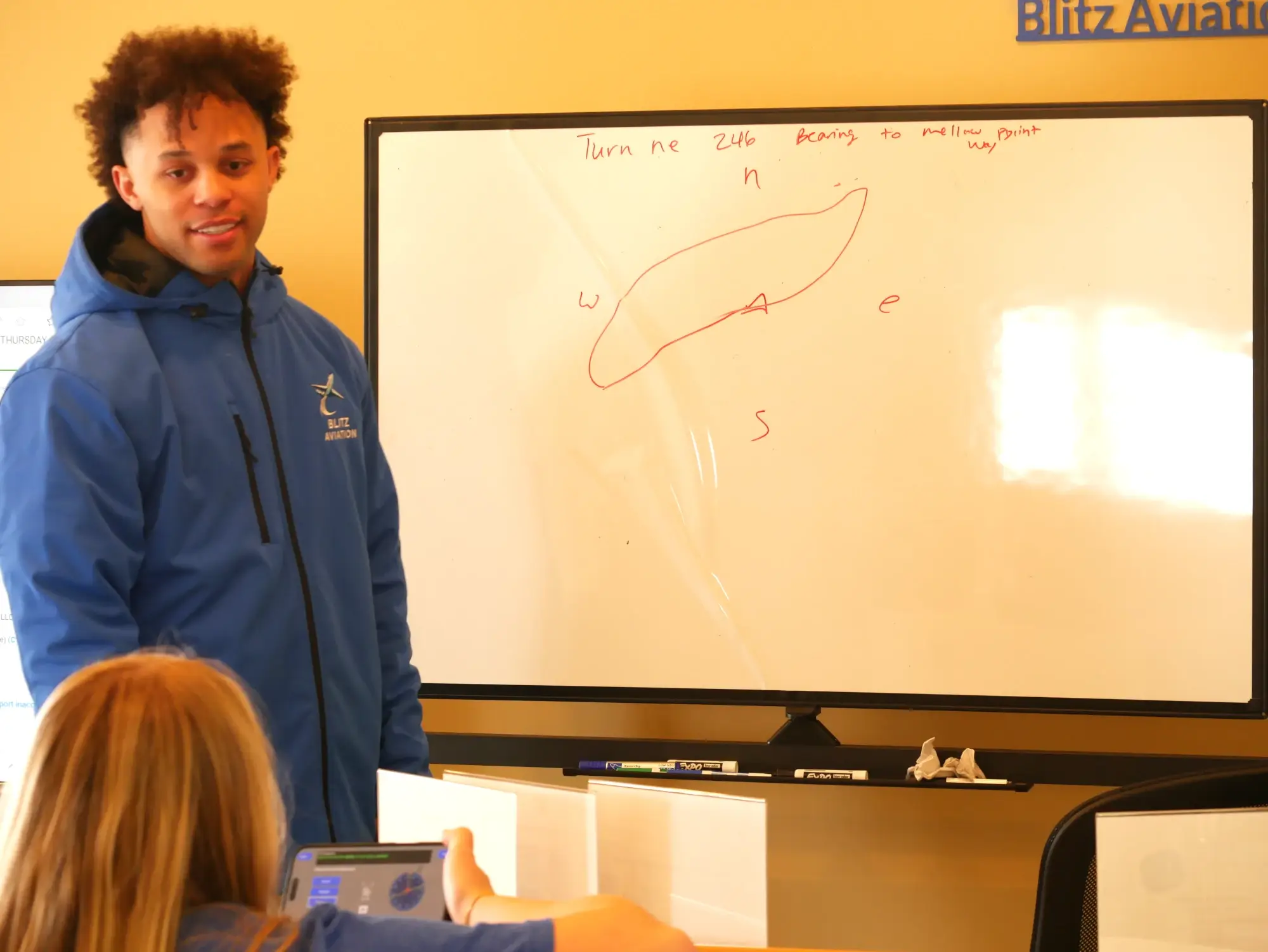
Ground school builds the foundation for IFR flying. You will learn:
- Instrument navigation systems
- Airspace and regulations
- Weather interpretation
- IFR charts and procedures
Understanding weather is especially important in Utah. Mountain weather can change rapidly, and learning how to interpret forecasts and reports is critical.
[IMAGE: Student reviewing IFR charts during ground school in Northern Utah]
Step 2: Simulator and Flight Training
This is where your skills begin to develop.
You will practice:
- Holding patterns
- Instrument approaches
- Intercepting and tracking courses
- Partial panel flying (limited instruments)
Training takes place in aircraft like the Cessna 172 and Piper Cherokee equipped with modern Garmin avionics.
👉 Explore our training fleet to see the aircraft used in IFR training.
Simulator sessions allow you to safely practice complex scenarios before flying them in real conditions.
Step 3: Cross-Country and Real-World Scenarios
You will complete IFR cross-country flights where you:
- File and fly IFR flight plans
- Communicate with Air Traffic Control
- Navigate between multiple airports
For example, a typical training route may include transitions between:
These flights build real-world confidence and decision-making ability.
Step 4: FAA Written Exam and Checkride
Once you are ready, you will:
- Pass the FAA knowledge test
- Complete your instrument checkride
This includes:
- Oral exam on IFR knowledge
- Flight test demonstrating instrument procedures
👉 If you need help preparing, read our guide on how to pass your FAA checkride.
Training Timeline
Your timeline depends on your schedule and consistency.
| Program Type | Duration |
|---|---|
| Accelerated (full-time) | 1–2 months |
| Part-Time (working pilots) | 3–4 months |
Students who train more frequently progress faster and retain skills better.
👉 Fast-track your training with our Accelerated Programs.
Deep Dive: What Makes IFR Training in Utah Unique
Training in Utah is different from flat terrain environments.
Mountain Flying Considerations
Flying near areas like Park City introduces:
- Terrain awareness challenges
- Wind patterns and downdrafts
- Higher density altitude
These factors make you a stronger, more adaptable pilot.
Busy Airspace
Operating near Salt Lake City requires:
- Clear communication with ATC
- Understanding Class B airspace
- Managing high traffic volume
This experience prepares you for professional flying environments.
Weather Variability
Utah weather can change quickly, especially in winter.
IFR training teaches you how to:
- Interpret METARs and TAFs
- Make go/no-go decisions
- Plan alternate routes safely
Practical IFR Training Checklist
Before your checkride, make sure you can confidently:
☐ Fly all instrument approaches to standards
☐ Hold altitude and heading precisely
☐ Communicate clearly with ATC
☐ Interpret weather reports accurately
☐ Plan and execute cross-country IFR flights
☐ Handle emergency scenarios under instruments
If you are unsure, schedule a training evaluation through our Contact Us page.
Common Challenges Students Face
Task Saturation
IFR flying increases workload significantly.
You must manage:
- Navigation
- Communication
- Aircraft control
The solution is practice and building strong habits.
Trusting Instruments
Many students struggle to trust instruments over their senses.
Your body can give false signals in clouds. IFR training teaches you to rely on your instruments instead.
Precision Flying
Small deviations matter more in IFR.
Maintaining altitude within 100 feet and heading within 10 degrees becomes critical.
Confidence Building Strategies
Practice Consistently
Frequent training sessions improve retention and confidence.
Use Simulation
Simulators allow you to repeat complex scenarios without risk.
Think Ahead
Always stay ahead of the aircraft. Plan your next step before you reach it.
What Comes After Your Instrument Rating?
Once you complete your instrument rating in Utah, you unlock the next stage of training.
You can continue into:
Or take the full path through our
👉 Zero-to-Hero program
Training Locations Across Northern Utah
We serve students across the Wasatch Front, including:
This regional exposure helps you train in diverse airspace and conditions.
Why Choose Blitz Aviation for IFR Training
- Experienced CFIs with real IFR experience
- Modern avionics for realistic training
- Diverse environment including mountains and Class B airspace
- Flexible scheduling for working professionals
- Structured training plans for faster progress
We focus on building confident pilots, not just passing checkrides.
Ready to Start Your Instrument Rating in Utah?
Earning your instrument rating is one of the best investments you can make in your aviation journey.
It improves safety, expands your capabilities, and prepares you for advanced training and professional opportunities.
👉 Schedule a consultation through our Contact Us page
👉 Or begin your training today with our Enrollment Form
With the right training, you will not just fly through clouds. You will understand them, navigate them, and stay in control every step of the way.

Blitz Aviation
Professional flight training school near Salt Lake City, Utah, specializing in accelerated pilot programs. Get your pilot license faster with our experienced instructors and modern fleet.