Student Pilot Experience Tips: Cross-Country Flights and Solo Practice Strategies
Maximize your flight training success with practical tips for managing cross-country flights and solo practice. Learn how Blitz Aviation supports students in gaining confidence and experience.
Becoming a confident pilot requires more than just completing lessons. It comes from real-world experience, smart decision-making, and consistent practice. At Blitz Aviation, we guide student pilots across Ogden, Salt Lake City, Layton, and Northern Utah through structured cross-country training and solo practice strategies that build both skill and confidence.
Whether you’re training near Ogden or commuting from Salt Lake City, these strategies will help you progress faster and fly safer.
Why Cross-Country Flights and Solo Practice Matter
Two of the most important phases in your training are cross-country flights and solo practice.
They are where you transition from:
- Following instructions → Making decisions
- Practicing maneuvers → Managing real flights
- Learning skills → Applying them under pressure
These phases are required for your Private Pilot License training, but more importantly, they shape how you think as a pilot.
Cross-Country Flight Tips for Student Pilots in Utah
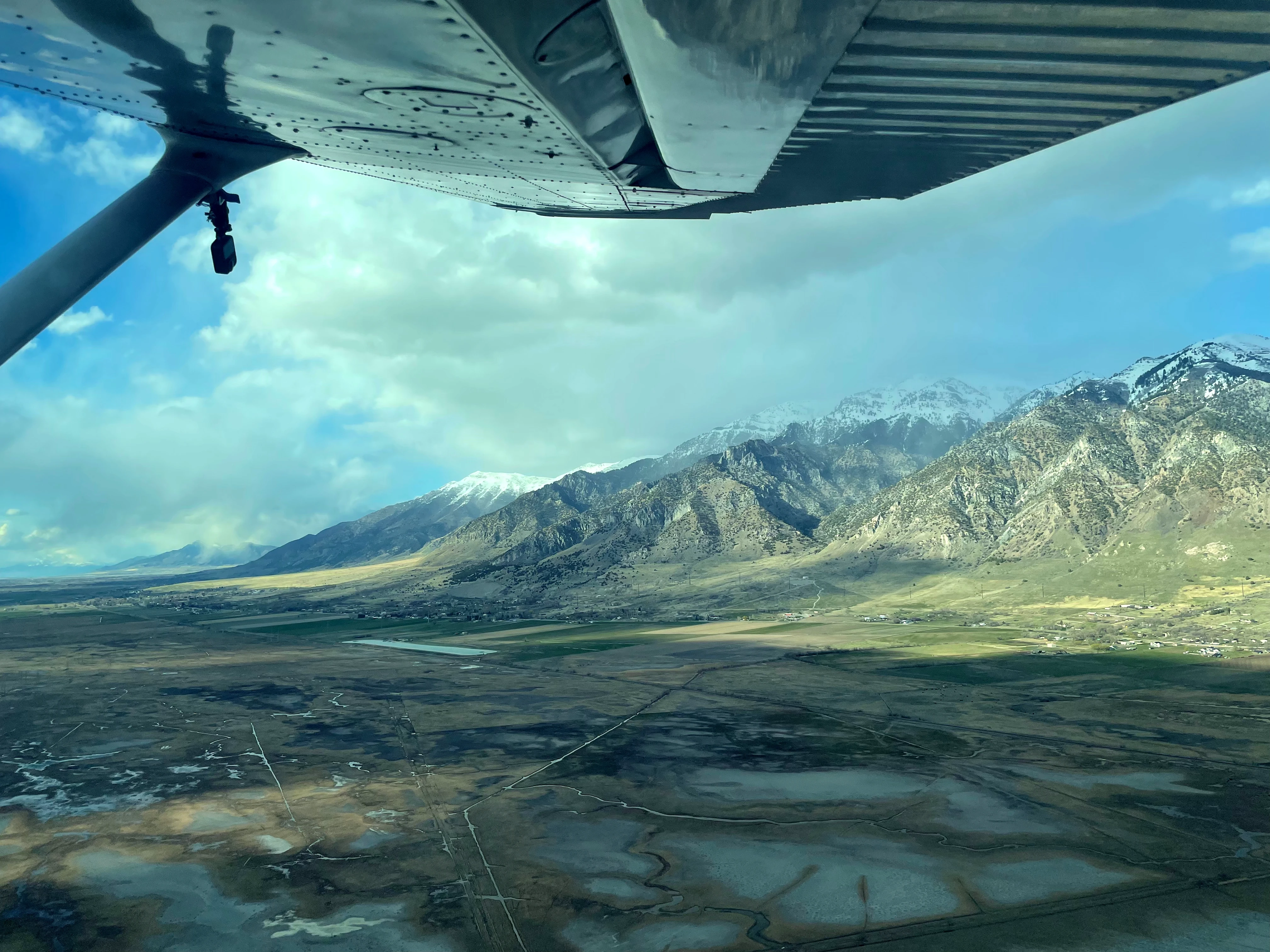
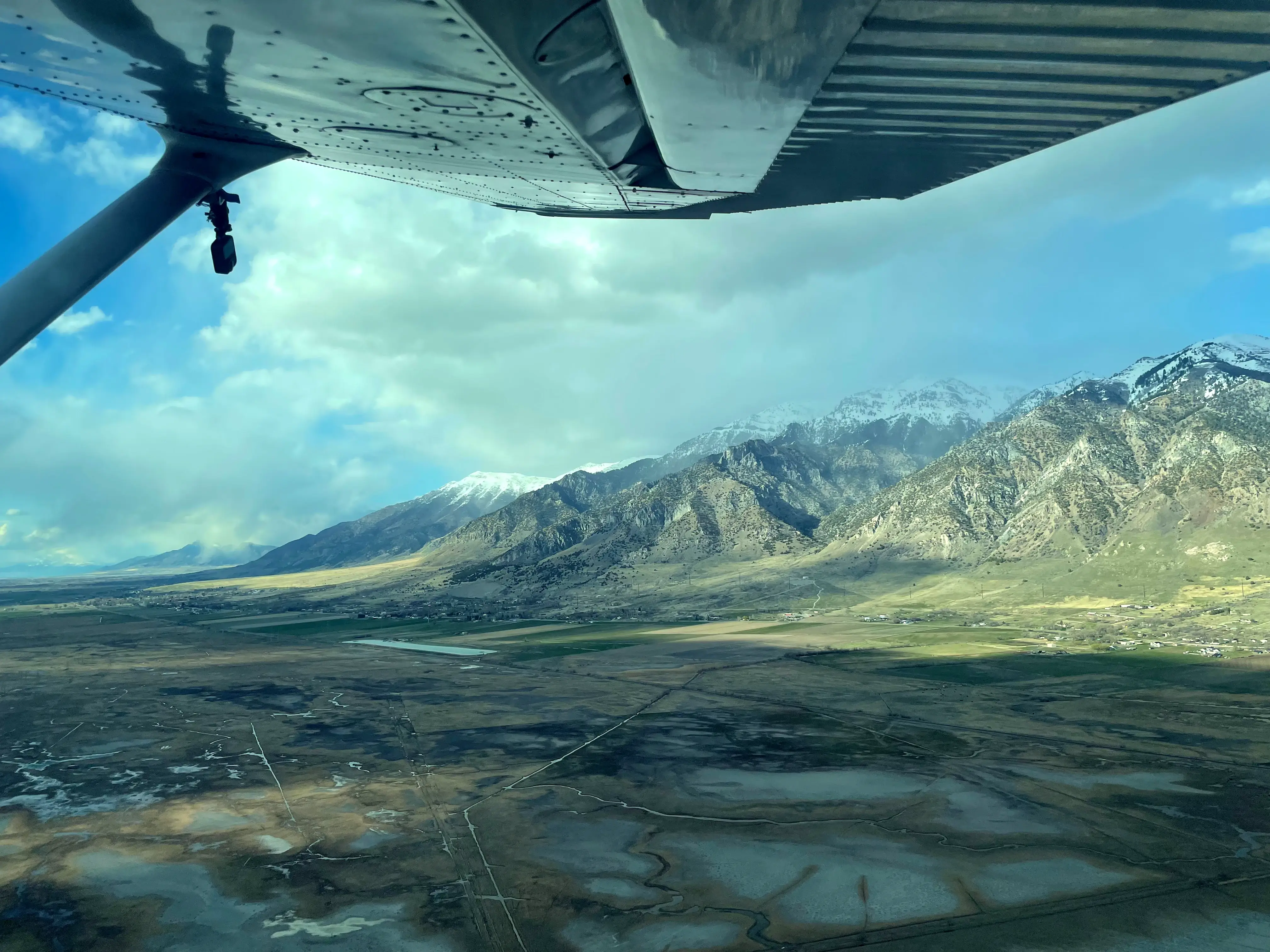
A cross-country flight in Utah is more than just flying from point A to point B. It introduces terrain, weather, and airspace complexity that you cannot simulate in local training alone.
1. Plan Like a Professional Pilot
Strong planning reduces stress in the air.
Before your flight:
- Review sectional charts carefully
- Identify checkpoints every 10–15 minutes
- Calculate fuel burn with a safety margin
- Select at least one alternate airport
Students training from areas like Layton or Kaysville often encounter mixed airspace and terrain, making planning even more critical.
Practical Tip:
Write down your full flight plan on a kneeboard. Do not rely on memory.
2. Understand Utah Terrain and Weather
Flying in Northern Utah introduces unique conditions:
- Mountain winds and turbulence
- Density altitude changes
- Rapid weather shifts
For example, routes toward Park City involve higher elevation and performance considerations compared to flights near Clearfield.
Key habit:
Always check weather twice. Once during planning and once right before departure.
3. Break Flights Into Manageable Segments
Long flights feel easier when divided into smaller legs.
Instead of thinking:
“90-minute flight”
Think:
- Departure phase
- First checkpoint
- Midpoint evaluation
- Arrival setup
This keeps your workload manageable and improves situational awareness.
4. Stay Ahead of the Aircraft
A common student mistake is reacting too late.
Stay ahead by:
- Setting heading and altitude early
- Briefing your next step before reaching it
- Monitoring fuel and time continuously
This becomes especially important when transitioning into busier areas like Salt Lake City airspace.
5. Use Instructor Debriefs to Improve Fast
After every cross-country flight, your learning multiplies during the debrief.
At Blitz Aviation, we focus on:
- Decision-making analysis
- Navigation accuracy
- Communication clarity
- Risk management choices
Take notes immediately after your flight. Small adjustments here lead to major improvements later.
Solo Practice Strategies That Build Real Confidence
Your first solo is a milestone. But true growth comes from consistent solo practice after that moment.
1. Start Small and Build Gradually
Do not rush into complex flights.
Progression should look like:
- Pattern work
- Local area flights
- Extended local practice
- Solo cross-country
Students near Roy or North Ogden often benefit from repeating local routes before expanding outward.
2. Use a Structured Solo Practice Plan
Avoid random flying.
Before each solo flight, define:
- 2–3 specific goals
- Maneuvers to practice
- Time limits
- Evaluation criteria
Example plan:
- 5 takeoffs and landings
- 10 minutes of slow flight
- 2 simulated emergency procedures (mentally rehearsed)
This keeps your training efficient.
3. Master Checklists and Consistency
Consistency builds safety.
During solo flights:
- Follow checklists exactly
- Use the same flow every time
- Avoid skipping steps
Pilots who develop strong habits early perform better during checkrides and advanced training like Instrument Rating programs.
4. Practice Scenario Thinking on the Ground
You cannot simulate emergencies safely in the air alone, but you can prepare.
Before flying, ask yourself:
- What if the engine fails after takeoff?
- What if weather changes mid-flight?
- What if I lose radio communication?
This mental preparation improves real-time decision-making.
5. Keep a Personal Flight Improvement Log
Beyond your official logbook, maintain a personal journal.
After each flight, write:
- What went well
- What needs improvement
- One focus for next flight
Over time, this creates a clear progression path.
Building Confidence as a Student Pilot
Confidence is not automatic. It is built through repetition and structure.
At Blitz Aviation, we focus on:
- Gradual exposure to complexity
- Clear performance benchmarks
- Instructor feedback after every flight
- Real-world scenario training
Students training from Farmington or Bountiful often see faster improvement when combining structured solo practice with guided cross-country training.
Common Questions About Cross-Country and Solo Training
How many cross-country flights do I need?
For a Private Pilot License, the FAA requires:
- Dual Cross-Country (with instructor): At least 3 hours of cross-country flight training.
- At least one solo cross-country (5 hours)
- A long cross-country flight (150 nautical miles total distance)
However, most students benefit from additional practice flights.
How do I know if I am ready to fly solo?
Your instructor will evaluate:
- Consistent landings
- Safe decision-making
- Proper checklist usage
- Situational awareness
If you feel unsure, that is normal. Confidence grows with repetition.
What is the biggest mistake student pilots make?
The most common mistake is inconsistency.
Skipping steps, rushing procedures, or flying without a plan slows progress more than lack of skill.
Practical Checklist for Every Flight
Use this quick checklist before every cross-country or solo flight:
☐ Weather checked twice
☐ Flight plan reviewed and written
☐ Fuel calculated with reserves
☐ Alternate airport selected
☐ Checklists ready and accessible
☐ Personal minimums defined
This simple system reduces risk and improves confidence.
Training Environment Matters
Your learning environment has a major impact on your development.
At Blitz Aviation, you train in:
- Controlled and uncontrolled airspace
- Mountain and flat terrain
- Real-world traffic environments
Explore our aircraft fleet to see the tools you’ll use during training.
This variety prepares you for real flying, not just passing a test.
Your Next Step as a Student Pilot
If you want to improve faster, focus on intentional practice.
Do not just log hours. Build skills.
- Plan each flight with a purpose
- Review performance after every lesson
- Ask for targeted instructor feedback
If you are ready to take your training further, explore our accelerated pilot training programs or apply directly through our enrollment form.
You can also contact our team to build a personalized training plan based on your goals.
At Blitz Aviation, we help student pilots across Ogden, Salt Lake City, Layton, Provo, and Northern Utah develop the skills, discipline, and confidence needed to succeed.
Cross-country flights and solo practice are where real pilots are made. With the right strategy, every flight becomes a step toward mastery.

Blitz Aviation
Professional flight training school near Salt Lake City, Utah, specializing in accelerated pilot programs. Get your pilot license faster with our experienced instructors and modern fleet.