Why Many Student Pilots Choose Ogden Over Salt Lake City Airports
 Mycah Pittman
 Discover why student pilots across Northern Utah choose Ogden-Hinckley Airport for flight training instead of busier Salt Lake City airports. Learn how lower traffic, diverse airspace, and mountain flying opportunities create a better training experience.
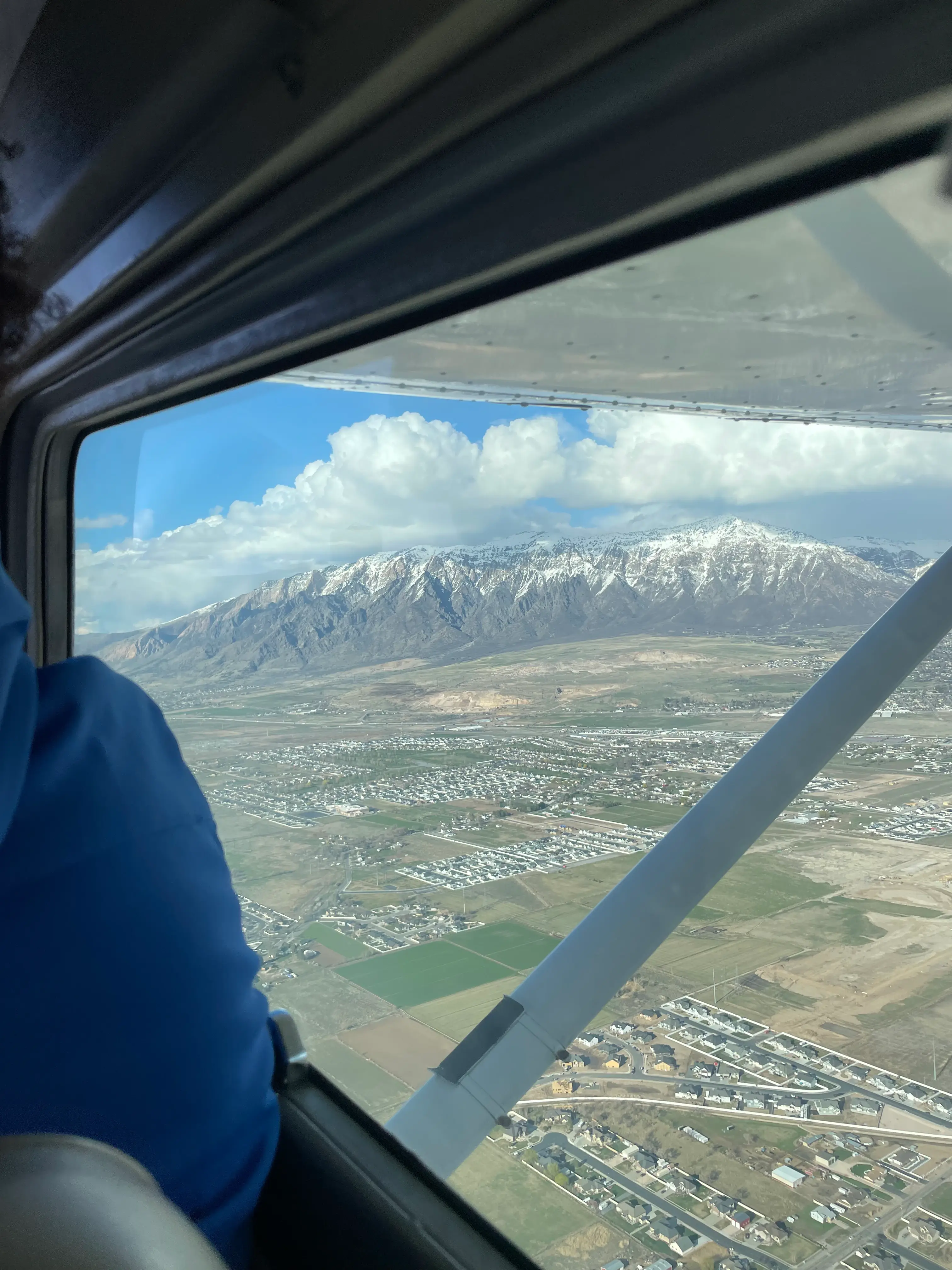
Choosing where to begin flight training is one of the most important decisions a future pilot will make. While many people initially search for flight schools near Salt Lake City International Airport, a growing number of students across Northern Utah are discovering that Ogden-Hinckley Airport (KOGD) provides a more effective environment for learning how to fly.
At Blitz Aviation, we work with students from Salt Lake City, Layton, Bountiful, Provo, and surrounding communities who specifically choose Ogden because it allows them to train more efficiently, reduce unnecessary stress, and gain practical flying experience faster.
For many student pilots, the difference becomes obvious after only a few lessons.
Why the Airport Environment Matters More Than Most Students Realize
Most future pilots focus heavily on aircraft, pricing, or instructor availability when comparing flight schools. Those factors matter, but the actual airport environment often has an even bigger impact on the overall learning experience.
The airport where you train affects:
| Training Factor | Impact on Student Experience |
|---|---|
| Ground traffic | Influences how much time is spent waiting instead of flying |
| Radio workload | Affects stress and communication confidence |
| Airspace complexity | Determines how quickly students adapt to navigation and ATC |
| Taxi times | Changes lesson efficiency and aircraft costs |
| Local terrain | Builds real-world weather and decision-making skills |
Many first-time students assume larger airports automatically provide better training because they appear more professional or more advanced.
In reality, student pilots usually learn faster in environments that balance structure, manageable traffic levels, and progressive exposure to more advanced flying conditions.
That balance is exactly why many pilots choose Ogden over busier Salt Lake City airports.
Ogden-Hinckley Airport Creates a More Efficient Learning Environment
One of the biggest advantages of training at KOGD is lesson efficiency.
At large airline-focused airports, students often spend a significant portion of their scheduled lesson time waiting for clearance, holding short for commercial traffic, or taxiing long distances across crowded ramps and runways.
That may not sound important at first, but over dozens of lessons, those delays add up financially and operationally.
At Ogden-Hinckley Airport, students typically spend more time:
- Practicing maneuvers
- Improving takeoffs and landings
- Building navigation skills
- Developing confidence in the aircraft
And less time sitting still on the ground.
This becomes especially important during early-stage training when repetition matters most. Student pilots improve faster when they can repeat maneuvers consistently without long interruptions between practice opportunities.
Ogden vs Salt Lake City Training Environment Comparison
Students researching a pilot school near Salt Lake City often compare airport environments before choosing a program.
Here is a simplified comparison of how the training experience can differ:
| Training Environment | Ogden-Hinckley Airport (KOGD) | Major Salt Lake Airports |
|---|---|---|
| Traffic congestion | Moderate and manageable | Often significantly heavier |
| Taxi delays | Typically shorter | Frequently longer |
| Student pilot workload | Progressive and structured | Can feel overwhelming early on |
| Airspace exposure | Diverse and scalable | Highly complex immediately |
| Training efficiency | High | Often reduced by congestion |
| Stress level for beginners | Lower | Higher for many first-time students |
That does not mean Salt Lake airports are bad environments.
However, many new pilots benefit from building confidence progressively instead of immediately being placed into extremely busy operations during their first few flight lessons.
Real-World Airspace Without Overwhelming Beginners
Some students worry that training outside Salt Lake City means they will not gain experience in busy or complex airspace.
That is not true.
Ogden offers an excellent middle ground because students still gain exposure to:
- Salt Lake City Class B airspace
- Hill Air Force Base operations
- Northern Utah traffic corridors
- Cross-country navigation environments
- Mountain flying conditions
The difference is that students are introduced to these environments gradually.
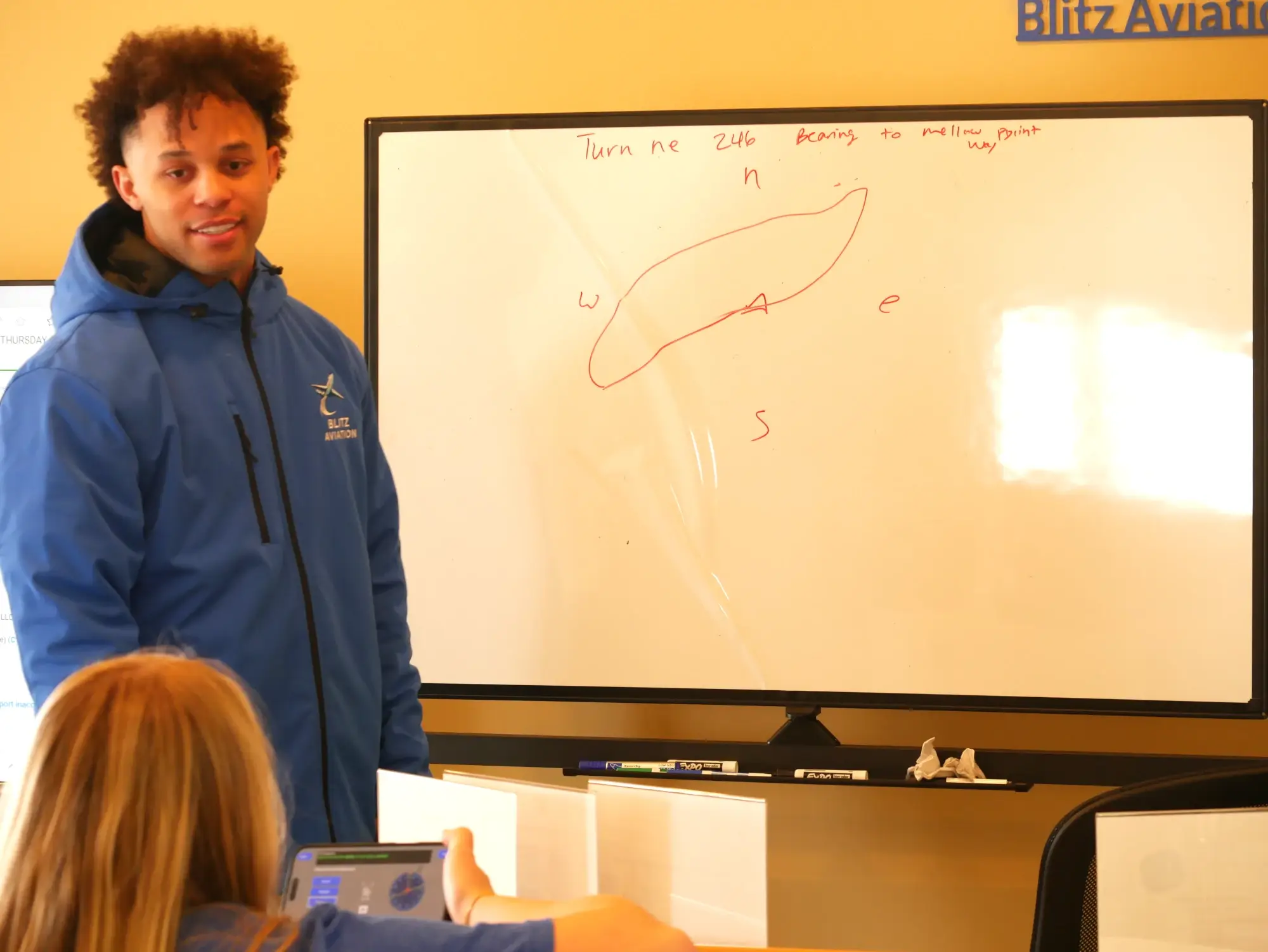
At Blitz Aviation, instructors help students build radio communication skills, traffic awareness, and navigation confidence step by step instead of overwhelming them on day one.
Students from Clearfield and Kaysville often appreciate this balance because it creates a smoother transition into more advanced operations later in training.
Utah’s Terrain Creates Better Real-World Pilots
Training in Northern Utah exposes students to environmental conditions that help build stronger aeronautical decision-making skills early in training.
Pilots who learn in this environment often develop greater weather awareness, terrain planning habits, and aircraft performance understanding compared to students who only train in flat, low-elevation areas.
Mountain Terrain
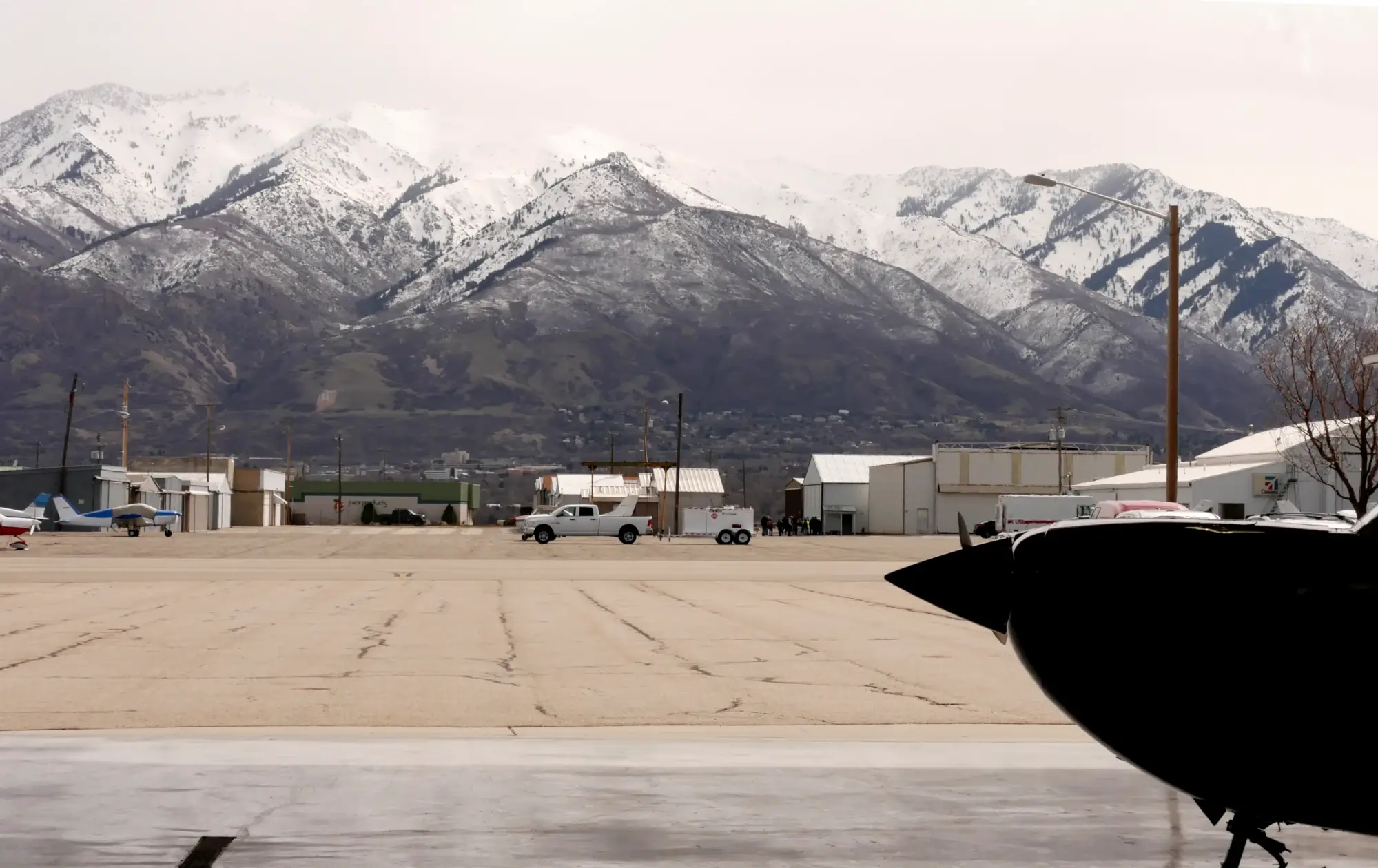
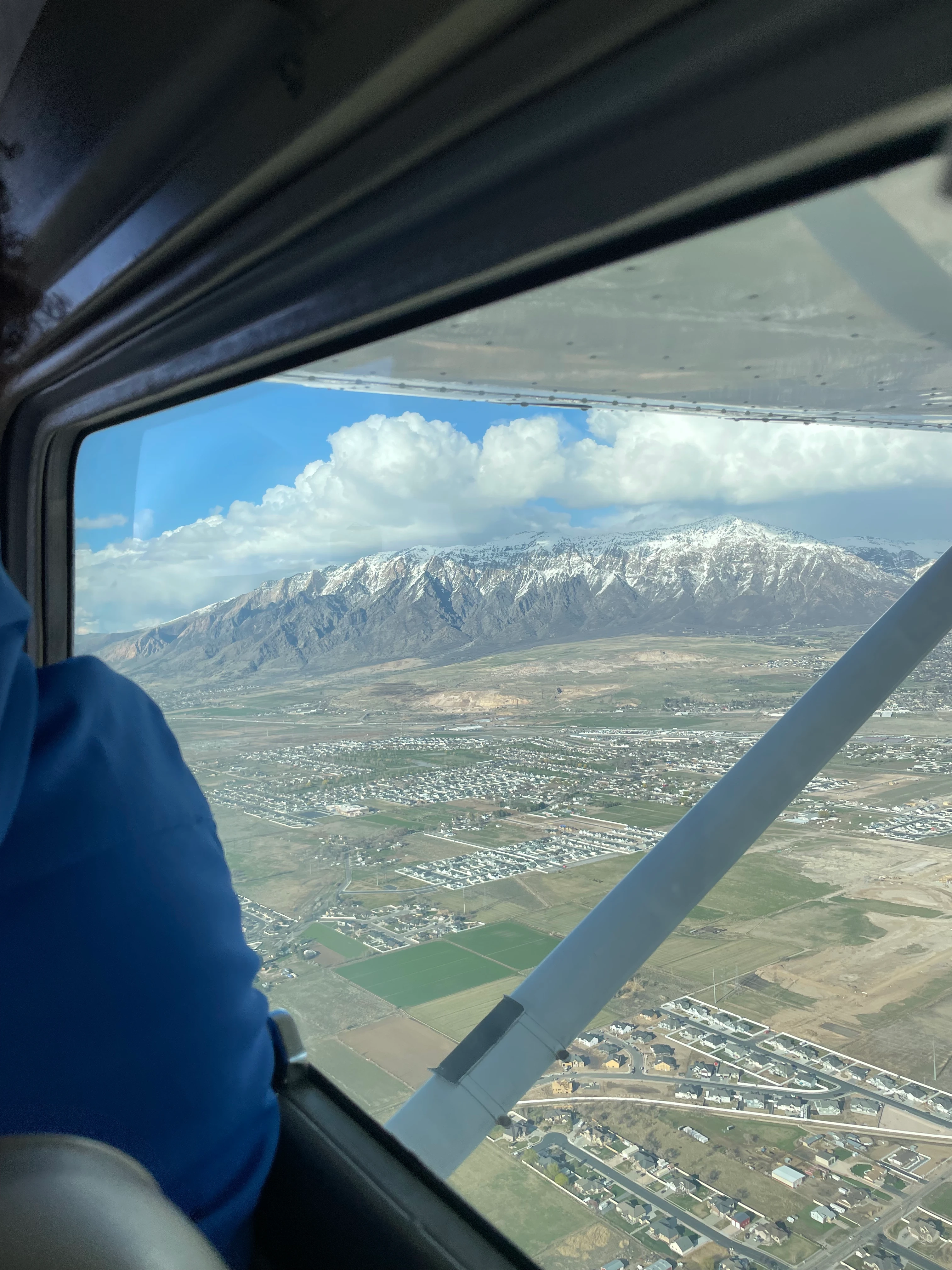
The Wasatch Mountains create a dynamic flight training environment that teaches students how terrain affects routing, turbulence, navigation, and situational awareness.
Pilots training near Ogden learn to evaluate terrain carefully while planning cross-country flights and weather routes.
This experience becomes extremely valuable later in aviation careers.
Density Altitude Awareness
Utah’s elevation and summer temperatures introduce students to density altitude concepts early in training.
Density altitude affects:
- Takeoff performance
- Climb capability
- Aircraft handling
- Fuel planning
Learning these concepts in real-world conditions helps students become more safety-conscious pilots.
Seasonal Weather Changes
Northern Utah experiences meaningful seasonal transitions throughout the year.
Students learn how to adapt flight planning for:
| Season | Common Flight Considerations |
|---|---|
| Summer | Density altitude and afternoon thermals |
| Fall | Wind shifts and changing visibility |
| Winter | Snow systems and colder temperatures |
| Spring | Rapid weather transitions and gusty winds |
This variety builds stronger situational awareness and operational flexibility.
Valley Wind Systems
Wind behavior along the Wasatch Front changes significantly depending on terrain, time of day, and seasonal weather patterns.
Students gain practical experience interpreting forecasts, evaluating crosswind conditions, and understanding how local geography influences airflow around airports and mountain corridors.
High-Elevation Airport Operations
Students completing cross-country flights near Park City, Logan, and Brigham City often gain valuable experience operating around higher-elevation airports.
These lessons improve performance planning skills and increase pilot adaptability.
Why Training Efficiency Also Impacts Cost
One factor many students overlook is how airport congestion affects overall training cost.
When aircraft engines are running but the airplane is not flying, students are still paying for:
- Aircraft rental time
- Instructor time
- Fuel consumption
Long taxi delays and heavy traffic patterns can significantly reduce lesson efficiency over time.
At Ogden-Hinckley Airport, students are often able to maximize actual flight practice during each lesson, which can help improve progression speed and reduce unnecessary costs throughout training.
That efficiency matters whether a student is pursuing recreational flying or preparing for a professional aviation career.
A Better Environment for Nervous First-Time Flyers
Learning to fly naturally pushes people outside their comfort zone.
For many new students, beginning at an extremely busy airport can increase anxiety unnecessarily during the first phase of training.
At Blitz Aviation, students frequently mention that Ogden feels:
| Student Concern | Why Ogden Helps |
|---|---|
| Fear of radio communication | Lower initial workload allows easier learning |
| Nervousness during takeoff | Less congestion creates calmer pacing |
| First solo anxiety | Predictable traffic environment improves confidence |
| Information overload | Progressive complexity reduces stress |
This becomes especially important during:
- Discovery flights
- Early landing practice
- First solo preparation
- Initial radio communication training
Students from Farmington and Roy often choose Ogden specifically because it provides a calmer introduction to aviation without sacrificing quality instruction.
Ogden Still Provides Exposure to Advanced Operations
Choosing Ogden does not mean avoiding advanced aviation environments.
As students progress through training, they regularly gain experience with:
Class B Airspace Transitions
Students learn how to communicate and navigate safely near Salt Lake City’s controlled airspace environment.
Cross-Country Navigation
Longer training flights expose students to changing terrain, multiple airport types, and real-world flight planning.
Controlled and Uncontrolled Airports
Pilots learn how to adapt communication and traffic scanning techniques depending on airport operations.
Instrument and Commercial Operations
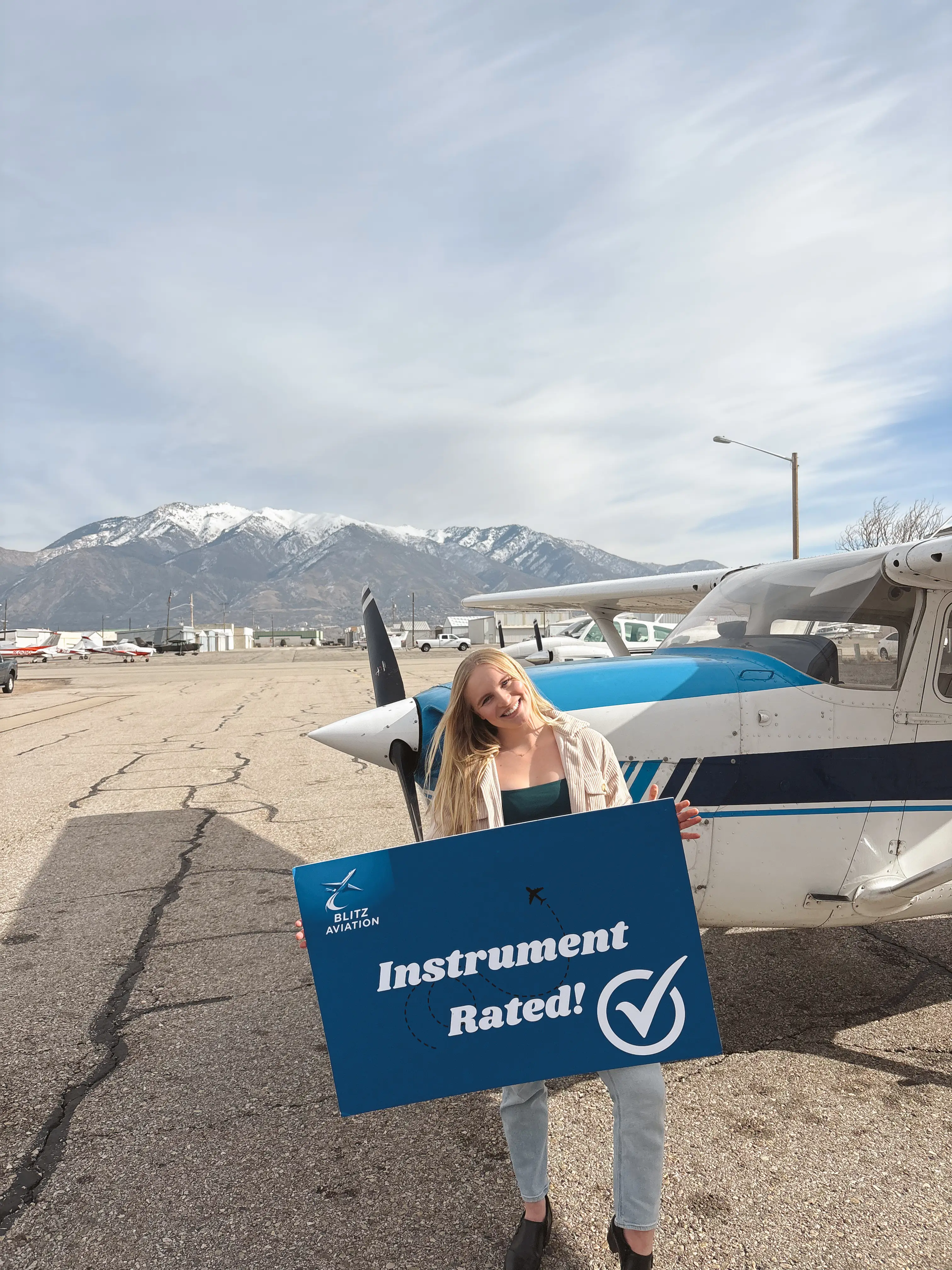
As students move into advanced programs like Instrument Rating training and Commercial Pilot training, they continue developing more complex operational skills in increasingly demanding environments.
This progression produces well-rounded pilots instead of pilots who simply memorize procedures for checkrides.
Why Career-Focused Students Often Prefer Ogden
Students pursuing professional aviation careers need more than minimum FAA requirements.
Airlines and commercial operators value pilots who demonstrate:
- Strong aeronautical decision-making
- Consistent communication skills
- Situational awareness
- Adaptability under workload
- Real-world weather experience
The Northern Utah training environment helps students build those skills naturally throughout their progression.
Many students entering our Zero-to-Hero pilot program choose Blitz Aviation because they want a training environment that develops practical experience alongside FAA proficiency standards.
Discovery Flights Help Students Understand the Difference Quickly
Many future pilots do not fully understand how airport environment impacts training until they experience it firsthand.
That is why discovery flights are so valuable.
During a discovery flight at Blitz Aviation, students can:
- Experience Ogden airspace firsthand
- Observe real instructor communication
- Learn basic aircraft control
- See the Wasatch Front from the air
- Understand how flight lessons operate
For many students, the difference becomes immediately clear after seeing how efficient and approachable the training environment feels compared to busier commercial airports.
Modern Aircraft and Structured Instruction Matter Too
Airport environment is important, but quality aircraft and professional instruction matter just as much.
At Blitz Aviation, students train in modern aircraft equipped with updated avionics and safety-focused systems designed to support long-term skill development.
Students can explore our flight training fleet to learn more about the aircraft used throughout each training program.
Combined with structured instruction and progressive skill-building, students gain an efficient and supportive learning experience from day one.
Serving Students Across Northern Utah
Blitz Aviation serves students throughout the Wasatch Front and surrounding communities, including:
Many students commute specifically because the Ogden training environment creates a better overall experience for both beginner and advanced pilot training.
Is Ogden Better for Every Student Pilot?
Every student has different goals, schedules, and learning preferences.
However, Ogden is often an excellent fit for students who want:
| Student Goal | Why Ogden Works Well |
|---|---|
| Faster lesson efficiency | Less congestion and shorter taxi times |
| Lower stress learning | Progressive exposure to complexity |
| Mountain flying experience | Unique Northern Utah terrain |
| Career-focused development | Real-world operational experience |
| Confidence building | Balanced training environment |
For many aspiring pilots, it provides an ideal combination of challenge, efficiency, and safety.
Ready to Start Flight Training in Northern Utah?
Whether your goal is recreational flying or a professional aviation career, the training environment you choose matters more than most students initially realize.
At Blitz Aviation, we help students across Northern Utah train efficiently, build confidence progressively, and develop practical real-world flying skills in one of the most unique aviation environments in the country.
You can explore our:
- Private Pilot program
- Instrument Rating training
- Commercial Pilot program
- Accelerated flight training programs
Ready to begin?
Apply for flight training or contact our team to schedule your discovery flight and learn why so many student pilots choose Ogden over Salt Lake City airports.

Blitz Aviation
Professional flight training school near Salt Lake City, Utah, specializing in accelerated pilot programs. Get your pilot license faster with our experienced instructors and modern fleet.